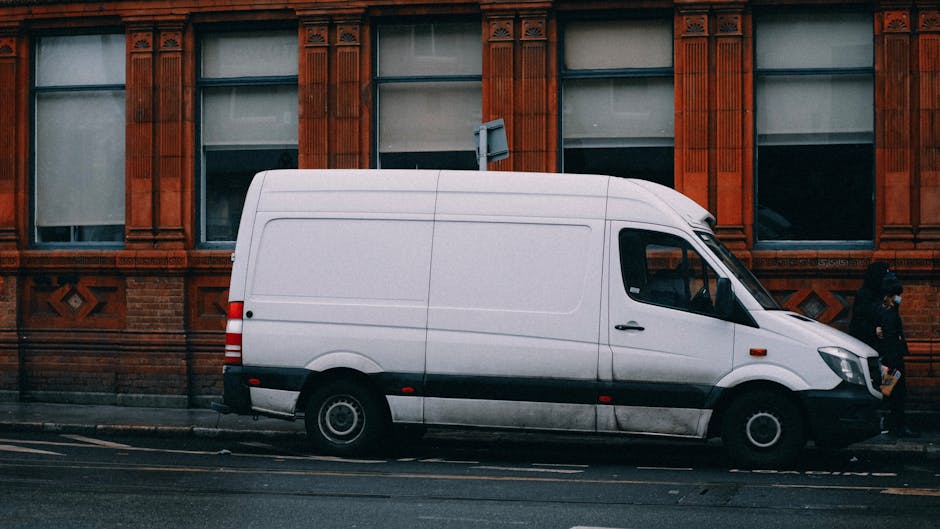
Marylebone High Street Removals: Best Local Routes
Moving around Marylebone High Street can feel simple on a map and surprisingly tricky on the pavement. One-way streets, loading restrictions, busy kerbs, delivery traffic, and the usual London shuffle all add up. If you are planning Marylebone High Street removals: best local routes, the real win is not just choosing a van. It is choosing the right route, the right timing, and the right loading plan so your move stays calm and efficient.
This guide breaks down the most practical routes, the local pinch points that matter, and the decisions that make a move smoother in this part of central London. Whether you are relocating a flat, a family home, or a small office, the aim is the same: fewer delays, fewer lifts, less stress, and a safer move. To be fair, that is what everyone wants on moving day.
For extra support, you may also want to explore home removals in Marylebone, man and van hire, or packing services in Marylebone if you need a more hands-on solution.
Table of Contents
- Why Marylebone High Street Removals: Best Local Routes Matters
- How Marylebone High Street Removals: Best Local Routes Works
- Key Benefits and Practical Advantages
- Who This Is For and When It Makes Sense
- Step-by-Step Guidance
- Expert Tips for Better Results
- Common Mistakes to Avoid
- Tools, Resources and Recommendations
- Law, Compliance, Standards, or Best Practice
- Options, Methods, or Comparison Table
- Case Study or Real-World Example
- Practical Checklist
- Conclusion
- Frequently Asked Questions
Why Marylebone High Street Removals: Best Local Routes Matters
Marylebone High Street sits in a part of London where the road layout rewards careful planning. It is not just about getting from A to B. The route you choose can affect whether a van can stop legally, whether heavy items can be carried safely, and whether your team spends ten minutes or forty minutes waiting for traffic to clear.
That matters most in central areas with mixed residential and commercial activity. You may have boutique traffic, school runs, service vehicles, taxis, and delivery vans all competing for the same road space. Add in narrow pavements and awkward entrances, and a move that looked straightforward can get messy fast. Ever watched a van edge into a tight street while someone is unloading crates nearby? It is a tiny slow-motion drama, and nobody needs that on moving day.
The best local route is usually the one that reduces congestion, avoids unnecessary turns, and gives your removals team the cleanest access to the property. In practical terms, that might mean approaching via wider arterial roads first, then using the quieter access streets for the final stretch. It also means working around local restrictions rather than fighting them.
If you are relocating within the wider area, it can help to compare service pages such as office removals for business moves or house clearance if you are clearing items before departure. Different move types often need different route planning.
How Marylebone High Street Removals: Best Local Routes Works
The process is part logistics, part local knowledge. A good removals plan starts with the property itself: floor level, access point, lift availability, parking options, and the size of the items being moved. Then you map the route in a way that fits the van, the time window, and the local road conditions.
In a Marylebone move, the route planning usually follows a few basic principles:
- Prefer wider approach roads for the first part of the journey, especially where traffic flow is steadier.
- Avoid unnecessary turns into very tight side streets unless the vehicle size and timing suit them.
- Check loading access near the exact property entrance rather than assuming street-level stopping will be easy.
- Build around time restrictions such as resident bays, business loading periods, and busier commuter windows.
- Allow a buffer for delays caused by roadworks, deliveries, or temporary obstructions.
That might sound obvious, but the details make the difference. A route that works for a small man and van hire job may not work at all for a larger household move with furniture, wardrobes, and fragile items. Likewise, an office relocation needs a different rhythm because building access, reception coordination, and equipment handling all come into play.
A sensible route plan is usually checked against the time of day. Early morning can be quieter. Midday can be unpredictable. Late afternoon can turn into stop-start frustration very quickly. In winter, when daylight disappears early, that matters even more because loading in the dark slows everything down and makes it harder to judge tight spaces.
Key Benefits and Practical Advantages
Choosing the best local route is not just about speed. It helps you protect your belongings, reduce labour time, and make the whole move feel more controlled. Here are the advantages that tend to matter most.
- Less waiting time at the kerb or outside the building.
- Safer handling of furniture, boxes, and awkward items.
- Lower risk of damage from rushed carrying or poor parking positions.
- Better use of movers' time, which can improve overall value.
- Fewer surprises from road restrictions or vehicle access issues.
- Less stress for you, which honestly can be the biggest benefit.
There is also a knock-on effect on planning. When the route is straightforward, you can schedule packing, key handover, cleaning, and storage more confidently. That is particularly useful if you are coordinating with storage services because the drop-off route may need to be just as carefully planned as the delivery route.
A small but useful point: good route planning often helps the move feel quieter. Less revving, less backtracking, fewer rushed calls. And that calmness tends to spread through the whole day. Strange, but true.
Who This Is For and When It Makes Sense
This approach is for anyone moving in or around Marylebone High Street who wants a cleaner, more predictable process. It is especially helpful in the following situations:
- Flat moves where access is tight and carrying distance matters.
- House moves involving larger furniture and family belongings.
- Office relocations that need a precise schedule and minimal disruption.
- Same-day moves where there is little room for error.
- Moves with storage where collection and drop-off happen in stages.
- Moves involving specialist items like pianos or oversized furniture.
If you are unsure which service fits your move, it may help to compare home removals with office removals or review a more flexible option such as man and van hire. The route itself may be similar, but the timing and loading method can differ quite a bit.
Truth be told, this is the kind of planning that helps most when life is already busy. Moving is rarely convenient. Jobs, school runs, lease deadlines, contractors, handovers ... it piles up. Good route planning gives you one less thing to worry about, and that matters.
Step-by-Step Guidance
Here is a practical way to plan a removal route around Marylebone High Street without overcomplicating things.
- Assess the property access. Check the entrance, stairs, lift, kerb space, and any awkward corners inside the building.
- List the main items. Sofas, beds, desks, mirrors, boxes, plants, and anything fragile or oversized should be counted early.
- Choose the vehicle size carefully. A larger van is not always better if local access is tight. Sometimes a smaller vehicle is quicker and less stressful.
- Map the likely route. Use sensible roads with clearer access rather than the shortest route on paper. The shortest way is not always the smartest way.
- Check timing. Avoid peak congestion where possible and allow breathing space for loading.
- Confirm parking or stopping options. Do not leave this until the day itself. That is how little problems become big ones.
- Protect fragile items first. If packing is still underway, group breakables together and load them with care.
- Plan the unloading order. Put the first-needed items near the back or top of the load so they can come out quickly.
A useful rule of thumb: if you have to walk half a street with a wardrobe, the route or the access plan probably needs another look. Small details save time. They really do.
If you are still packing, a dedicated packing service can make the loading phase much smoother because boxes are more uniform, labelled, and easier to stack safely.
Expert Tips for Better Results
Local removals are won in the preparation, not the van. The following tips come from the kind of practical issues that appear again and again in central London moves.
- Move before the rush where possible. Early departures often mean fewer delays and easier kerb access.
- Label rooms, not just boxes. It saves time at the other end, especially if you are unloading into a flat with several levels.
- Keep an "open first" box. A kettle, phone charger, basic tools, toiletries, and a few essentials can make the first night much easier.
- Disassemble only what helps. Not every item needs to be taken apart. Sometimes over-disassembling creates more work than it saves.
- Use padding around awkward furniture. Hallways in older buildings can be unforgiving. One bang against a wall and the mood changes quickly.
- Coordinate lift use carefully. If your building has a lift, check whether it can be reserved or protected during the move.
For office clients, a short planning guide such as stress-free office relocation tips is worth a read before move day. Office moves often fail because people underestimate the admin side, not because the van is too small.
And yes, good movers will spot problems quickly. A cracked pavement edge, a tight doorway, a sofa that will not turn on the landing. They see this stuff all the time. That experience counts for a lot.
Common Mistakes to Avoid
Most moving headaches in this area come from a short list of avoidable mistakes. You do not need perfection, just a better-than-average plan.
- Assuming the postcode tells the whole story. Marylebone streets can behave very differently block by block.
- Choosing a route without checking access at the exact destination. The last 100 metres often matter most.
- Leaving parking permissions too late. This is one of the easiest ways to lose time.
- Using the wrong vehicle size. Too big can be awkward; too small can mean extra journeys.
- Packing fragile items loosely. Route planning cannot save badly packed glassware. It just can't.
- Ignoring building rules. Some properties need advance notice, lift booking, or protection for common areas.
Another common one: people plan the outward route carefully but forget the return path for the van. In central London, that can matter just as much. A route that is perfect in one direction may be annoying in the other because of one-way systems, congestion, or a poor turning point.
If you are making space before a move, consider whether house clearance might simplify the job. Fewer items usually mean fewer access problems, fewer trips, and fewer surprises.
Tools, Resources and Recommendations
You do not need a suitcase full of specialist gear, but a few tools make a big difference. Here is what tends to help most.
| Tool or Resource | What it helps with | Why it matters locally |
|---|---|---|
| Route planning app or map | Choosing a sensible route and checking turn restrictions | Central London streets can change quickly with traffic and access limits |
| Room labels and marker pens | Faster unloading and less confusion | Useful in flats and offices where items need to go to the right floor or room |
| Protective blankets and straps | Keeping furniture safe during loading and transit | Helpful on narrow streets where loading angles are awkward |
| Parking or access notes | Preventing last-minute stopping issues | Especially important around busy roads and resident-only areas |
| Service information | Matching the move to the right support | Helps you choose between removals, packing, storage, or a smaller van |
For a broader overview of services and practical moving help, the Marylebone removals blog is a useful starting point. It is also smart to check the main contact page early if you want advice on timing, access, or route suitability before booking.
One more recommendation: keep a short written plan. Not a novel. Just a tidy note with times, addresses, access details, and the key contact numbers. It sounds old-fashioned, but on moving day old-fashioned is often excellent.
Law, Compliance, Standards, or Best Practice
Route planning for removals in Marylebone is not just about convenience. It also needs to respect local rules, property requirements, and normal UK moving standards. The exact requirements can vary by street, building, and borough guidance, so it is sensible to verify details before the move rather than assume them.
Common best-practice areas include:
- Parking and loading rules in the relevant street or bay.
- Building access arrangements such as lift booking, concierge approval, or move-in windows.
- Health and safety expectations for manual handling, safe lifting, and clear walkways.
- Insurance awareness so you understand what is covered during transit and loading.
- Responsible waste handling if items are being cleared rather than moved.
Reputable movers should be able to talk through these points clearly. If a company is vague about access, insurance, or handling precautions, that is a warning sign. A good provider will not promise magic. They will promise preparation, communication, and careful work.
You can also review helpful trust pages such as tips for a smooth home removal and office removals to understand how a professional move should be organised.
Options, Methods, or Comparison Table
Different moves need different approaches. In Marylebone, the choice often comes down to how much needs moving, how tight the access is, and how quickly it needs to happen.
| Method | Best for | Strengths | Trade-offs |
|---|---|---|---|
| Man and van | Small to medium moves, flexible schedules, quick local trips | Agile, cost-conscious, easier in tighter streets | May require more hands-on packing and loading planning |
| Full removals service | Homes, larger flats, complete relocations | More support, better for bulky furniture and structured moves | Needs more lead time and coordination |
| Office removals team | Workplaces, desks, IT equipment, staged business relocations | Designed for timing, order, and business continuity | Requires tighter planning with internal stakeholders |
| Storage-assisted move | Delayed completion dates, renovations, downsizing | Flexible and useful when dates do not line up | Two-step logistics instead of one direct move |
For many local residents, the sweet spot is a man and van service for smaller moves or a full home service for more demanding relocations. If you are moving into or out of a flat, the layout of the building often decides the best option before anything else does.
Case Study or Real-World Example
Picture a weekday morning move from a first-floor flat near Marylebone High Street to another property a few streets away. The belongings are fairly typical: a bed frame, a sofa, a dining table, several boxes of books, kitchenware, and one very awkward mirror that nobody wants to drop. Nothing dramatic, just a standard city move.
The first instinct might be to take the most direct route. But a better plan is to choose a route with smoother access and a better stopping position, even if it adds a minute or two on the road. Why? Because the real time loss usually comes from circling, waiting, or carrying items too far from the van. A slightly longer driving route can still produce a faster total move.
In this kind of move, the team would usually:
- arrive early enough to assess the street conditions before loading starts;
- use the most practical parking position available, even if it is not the nearest theoretical spot;
- load heavy furniture first and fragile items last;
- choose a return route that avoids unnecessary stop-start traffic;
- unload room by room so the client can settle in quickly.
The result is not glamorous. It is simply calm, efficient, and less tiring. That is the real objective. If you can finish a move, make a cup of tea, and not feel like you have run a marathon, the route planning worked.
Practical Checklist
Use this checklist before moving day. It keeps the moving process grounded and helps avoid last-minute scrambles.
- Confirm the full collection and delivery addresses.
- Check whether the property has lift access or stairs-only access.
- Note any loading or parking restrictions near the building.
- Choose the most suitable vehicle size for the streets involved.
- Pack fragile items securely and label them clearly.
- Keep essential documents, keys, and chargers in a separate bag.
- Reserve or request building access where needed.
- Tell neighbours or the concierge if a loading bay may be used.
- Plan the route with traffic and time-of-day in mind.
- Set aside a backup plan in case access is temporarily blocked.
Expert summary: the best local route is usually the one that protects access, reduces carrying distance, and matches the building layout. In Marylebone, that often matters more than shaving off a few minutes on the map.
Get a free quote today and see how much you can save.
Conclusion
Marylebone High Street removals work best when route planning is treated as part of the move, not an afterthought. The right local route can reduce delays, protect your belongings, and make the day feel far less chaotic. That is especially true in central London, where a few streets can completely change the pace of a move.
If you remember nothing else, remember this: access matters, timing matters, and the cleanest route is not always the shortest one. A little extra planning goes a long way. It saves time, protects your furniture, and gives you a steadier moving day from start to finish.
If you need help matching your move to the right service, take a look at home removals, man and van hire, or packing services. And if you would like direct guidance, the contact page is the best next step.
Move smart, keep it simple, and let the route do some of the hard work for you.
Frequently Asked Questions
What is the best route for removals around Marylebone High Street?
The best route is usually the one that combines easier access, fewer tight turns, and a realistic stopping point near the property. In practice, that often means prioritising vehicle access and loading convenience over the shortest possible drive.
Why does route planning matter so much for a Marylebone move?
Because local streets can be busy, narrow, and affected by loading restrictions. A good route reduces delays, helps movers work safely, and avoids awkward parking or unnecessary carrying distance.
Is a man and van service enough for a move in this area?
For smaller flats, student moves, or short local relocations, yes, it often is. For larger homes, complex access, or bulky furniture, a fuller removals service may be the better fit.
How early should I plan my moving route?
Ideally, plan it as soon as the move date is fixed. At minimum, give yourself enough time to check access, parking, and building rules before the day arrives.
Do I need to worry about parking near Marylebone High Street?
Yes, absolutely. Parking and stopping are often the real bottlenecks in central London moves. Always check the local situation in advance rather than assuming you can pull up easily.
What if my building has stairs and no lift?
Then route planning becomes even more important, because every extra metre from van to door adds effort and time. Smaller, more direct access is usually the priority in stair-only properties.
Can I use storage if my new place is not ready yet?
Yes. Storage is a common solution when completion dates, renovations, or key handovers do not line up neatly. It can be very helpful when you need to split a move into two stages.
Are office removals different from home removals in Marylebone?
They are. Office moves usually need tighter timing, more coordination, and extra care around equipment, paperwork, and business continuity. The route still matters, but the schedule and handover process often matter even more.
What should I ask a removals company before booking?
Ask about access planning, vehicle size, loading support, insurance, timing, and whether they have experience with your type of property. A good company should answer clearly and without fuss.
How can I make moving day less stressful?
Pack early, label boxes clearly, keep essentials separate, and confirm access details well in advance. A reliable moving plan makes a bigger difference than most people expect.
What is the biggest mistake people make with local removals?
Relying on the postcode alone and ignoring the last part of the journey. In Marylebone, the final approach, parking, and doorway access often determine whether the move feels easy or exhausting.
Where can I get advice if my move involves packing or clearance?
You can review helpful service information on packing services, house clearance, and the wider Marylebone removals blog for practical guidance before booking.